Camomile Line Art: Graphics & Illustrations
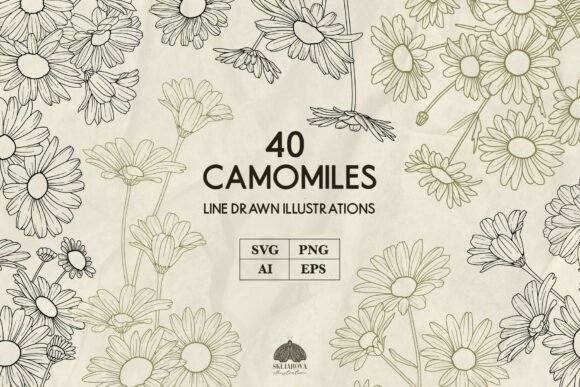
When a client approaches me with a brief for a boutique herbal tea brand or an artisanal skincare line, the visual direction often leans toward softness, purity, and organic authenticity. In these moments, I do not reach for bold, geometric shapes or high-contrast neon palettes. Instead, I look for assets that breathe. Recently, I integrated Camomile Line Art Svg Png into a branding package for a small business specializing in handmade wellness products, and the results were telling. This review breaks down how this specific collection performs in real-world design scenarios, moving beyond simple aesthetics to practical application.
The Visual Mood and First Impressions
The immediate impression of this asset bundle is one of delicate restraint. The hand-drawn nature of the camomile flowers avoids the sterile perfection of computer-generated vectors, offering a warmth that resonates with modern consumers seeking human connection. For a designer, this means the illustrations carry inherent emotional appeal. They feel approachable and gentle, which is crucial for brands selling comfort, relaxation, or natural care.
In terms of style, these graphics sit comfortably within the realm of modern botanical illustration. They are not overly detailed, which prevents them from becoming visual noise, yet they possess enough character to stand alone as hero elements. When I placed these illustrations against a muted sage background for a product label mockup, the white line work popped elegantly, creating a sense of premium quality without appearing ostentatious.
Versatility Across Client Projects
A major concern when purchasing any graphic design asset is its adaptability. Can it survive the transition from a digital screen to a physical product? With Camomile Line Art Svg Png, the answer is largely yes, provided you understand the strengths of the file formats included. The set offers SVG, AI, EPS, and PNG files, which covers the majority of professional workflows.
For packaging design, the vector files (AI and EPS) are indispensable. I scaled a large camomile frame to wrap around a cylindrical candle jar without any loss of quality. The lines remained crisp, ensuring that the print output would be sharp. Conversely, for quick social media graphics or Pinterest pins, the PNG files with transparent backgrounds saved hours of editing time. I dropped them directly into Canva templates for a client’s Instagram campaign, layering them over soft pastel gradients to create engaging, shareable content.
The utility extends further into the print-on-demand and crafting sectors. If you are designing for Etsy products, such as sticker sheets or printable wall art, these elements are ideal. The simplicity of the line art makes it perfect for sublimation design on mugs and tote bags, where complex details might get lost in the printing process. For Cricut users, the SVG format allows for clean cutting paths, making these flowers excellent for vinyl decals or paper craft projects.
Strategic Placement and Visual Hierarchy
Understanding where to place these assets is key to maintaining a strong visual hierarchy. These camomile illustrations work best as supportive elements rather than dominant focal points in text-heavy layouts. I found them most effective when used as decorative accents in the corners of invitations or as subtle watermarks behind body copy in editorial design.
However, caution is required. In crowded layouts, the fine lines can disappear. I attempted to use a smaller flower element as a bullet point in a dense informational flyer, but it lacked the visual weight needed to guide the eye. In such cases, a bolder icon or a solid shape is preferable. Similarly, on low-contrast backgrounds, such as light gray or pale yellow, the white or light-colored line art may vanish. Always test your designs in black and white first to ensure the structure holds up without color reliance.
Typography Pairings and Brand Consistency
The success of any brand identity project relies on harmony between imagery and type. These camomile graphics pair exceptionally well with serif fonts that evoke tradition and trust, such as Garamond or Baskerville. For a more contemporary look, a clean sans-serif font creates a nice contrast between the organic curves of the flowers and the geometric precision of the letters. I also experimented with script fonts for a wedding invitation suite; the flowing nature of the handwriting complemented the hand-drawn aesthetic of the flowers, reinforcing the handmade feel of the brand.
Avoid pairing these delicate illustrations with heavy, blocky display fonts, as the mismatch in visual weight can make the design feel unbalanced. The goal is to let the creative design elements breathe, allowing the viewer to appreciate the intricacy of the petals and stems.
Technical Considerations for Professional Use
Before delivering any final files to a client, I perform a rigorous technical check. With Camomile Line Art Svg Png, I verified the editability of the SVG files in Adobe Illustrator. Being able to adjust stroke weights and colors is vital for adapting the assets to different brand guidelines. I also inspected the PNG transparency to ensure there were no jagged edges or leftover pixels, which is common in lower-quality clipart.
For those using these assets in commercial projects, always confirm the licensing terms. While this bundle is marketed for commercial use, understanding the scope—whether it covers unlimited prints or digital sales—is essential for protecting both you and your client. This is particularly important for digital sellers who plan to incorporate these elements into their own design bundles or templates.
Final Verdict for Designers
In the context of a real client project, Camomile Line Art Svg Png proves to be a reliable and versatile tool. It bridges the gap between amateur clipart and custom illustration, offering a polished look that elevates small business branding efforts. Whether you are creating marketing visuals for a local event, designing packaging for a new product launch, or crafting digital ads for a seasonal campaign, these graphics provide a cohesive visual language.
The key takeaway is to respect the delicacy of the line work. Use it to enhance, not overwhelm. When applied with intention, these camomile illustrations add a layer of sophistication and warmth that can significantly boost audience engagement and brand recognition. For designers working in the wellness, lifestyle, or handmade sectors, this asset is a worthy addition to your creative toolkit.